Like nearly every morning since I made the plans, I acknowledge my mistake. I’m sure I need to cancel. This means I will lose several thousand dollars. I will also suffer the shame of admitting my cowardice to family and friends. Even worse, I will break a promise I made to my husband Richard. Though he’s no longer here, I feel certain he will mind.
Minutes later, I remind myself I can do this. More than once, I travelled to Nicaragua alone, forced to take that country’s airline, Aeronica, from Mexico City because the U.S. government had imposed an embargo on the revolutionary Sandinista-led government. During several visits to Nicaragua, I spent anxious hours in warzones.
Unfortunately, I am no longer the woman who on arriving in Mexico City days after a massive earthquake asked a taxi driver to show her around. Not to mince words, one undeniable difference from my former self is that I am old. An even greater change is that I’ve spent the last three decades as half of a pair. I am now learning to travel the world alone.
Each time the thought of cancelling comes up, I wrestle with my fears, then commit to going. My way-too-heavy suitcase is mostly packed. I have a small stack of paper confirming my reservations.
Like many people, I haven’t flown since the start of the Covid-19 pandemic. A year before that was the last time my husband and I left the house with suitcases packed for fun. He had been getting chemotherapy for six months to kill the malignant cancer infecting his bones by then. Though chemo had worn him down, he still managed the uphill climb on one of our favorite trails, in Northern California’s Lakes Basin Recreation Area. We rewarded ourselves, sitting on the shore of sparkling Silver Lake, with tuna sandwiches I’d made that morning in our rented cabin.
In the years Richard and I were together, we travelled as often as possible. Barely a three-day weekend passed that we didn’t have out-of-town plans.
Even with Richard being treated for stage four cancer and Covid’s threat, we hoped to make one last trip together to a favorite place, Kauai. As his energy drained away, he thought about the trip and admitted he didn’t think going there now would be fun.
“Everyone on the plane will be happy because they’re on vacation,” he began. “I’ll be flying to Kauai because I’m going to die.”
I nodded, sadly aware he was right.
“Plus,” he went on. “I won’t be able to do any of the things I loved doing there – hiking and snorkeling.”
Then he concluded, “I don’t want to go.”
At some point in Richard’s final months, I made the promise. I would take a portion of his ashes and scatter them in Kauai.
Thinking back to when I said those words, I realize I didn’t know how hard such a seemingly simple act might be. As I argue with myself about going through with this, I’m aware of how wrenching each step will be.
***
After untold hours of online scrolling, I settled on a narrow bamboo scattering urn that arrived in a pale gray velvet case. Not wanting to leave the transferring of Richard’s ashes to the last minute, I vowed to do what I hadn’t yet — move the permanent urn I picked up at the mortuary out of the closet.
Three days before my flight, I lifted the dark crimson velvet-enclosed urn out of the closet, keeping my grip tight. The thought that I might drop the weighty container as I walked across the bedroom made it hard to breathe. Thankfully, the urn remained in my hands. Once I’d safely set it down on the floor, I took several deep breaths, then proceeded to open it for the first time.
Instead of being secured, the lid was upside down on top. Underneath, a tightly fastened plastic bag filled the good-sized pale green container. The moment I untied the cord, I started to sob. Cries exploded from deep inside, where an unfathomably huge well of sorrow had lain from the moment Richard died. I had cried every day since that awful morning. But this weeping was like what happened the moment his breath stopped. Somehow, I managed to calm down enough to transfer some ashes from the large urn to the small. Now that this was done, I announced to the empty room, “Yes, I am going to Kauai.”
***
I step off the shuttle after a brief ride from the airport terminal in Lihue, Kauai. Wind is pitching rain horizontally. People and luggage fill the patio underneath the overhang, in front of the rental car office.
I make my way through the crowd, step inside, and see that the line stretches to the door. I don’t want to count the number of people ahead of me or consider how long it will take to get a car. It’s obvious I’m going to be here a long time.
At least, I’ll have time to try and soothe the anxiety that’s gnawing at me. I have never rented a car by myself. Richard handled this part. Not only that. He always drove.
But there’s more. I am a reluctant driver, having learned late. Before going any place I haven’t previously driven, I fret endlessly, fearing I’ll get lost, or worse, crash the car.
Two clerks work at opposite ends of the counter, tending to this entire throng of waiting customers. At one point, a woman behind me announces, “I think we’re making progress.” A second woman counters, “Either that or we’re just moving closer together.”
Everyone laughs. They’re probably in good moods, at the start of their tropical vacations.
Looking out to where the families and friends of folks in line are waiting, I notice one of the wild chickens you see everywhere in Kauai. The colorful mother stands in front of a brood of tiny tan chicks. I count nine. The sight momentarily cheers me.
***
At long last, I get my turn at the counter, and everything goes fine. Though this felt like a test I was bound to fail, the friendly clerk had no idea I was a novice at the simple task of renting a car.
When I step outside, the weather seems wilder than when I arrived. My left hand on the suitcase handle and right on the car key, I lack a free hand to keep my jacket hood over my head.
A few minutes after plodding around the parking lot in the blinding rain, I spot the Ford Focus assigned to me and press the key fob. Though unsure whether I heard a reassuring click, I grab the door handle and tug. It doesn’t budge. I press the key fob several more times but get the same result.
I jog back into the office and interrupt the clerk now helping another customer. She thinks she hears a click when pressing the fob and tells me to go out again.
By now, my hair is soaked, and glasses fogged. I give the fob another try, then head back inside, where I’m told to see a different clerk helping customers under the overhang outside.
I somehow manage to steer my substitute rental, a red Kia, where I need to go. In the pouring rain, I’ve miraculously made it onto the highway. Water has pooled on the road, so the large truck in front of me keeps tossing water at my windshield. The wipers barely keep up.
Fifteen minutes after getting on the highway, I spot a large sign to the right. It reads, Wailua Golf Course. I remember that the condo where I’m staying sits just past the Wailua River. I feel like I might make it after all.
That’s when a miracle occurs. I cross the bridge that spans the Wailua River and suddenly know where I am. The place looks as familiar as if I’d been here last week. The turn for the condo I’ve reserved is about to come up.
Later, I will tell myself it was Richard’s doing. He looked down, saw I needed help, and whispered, “Turn here, Gumby,” using the affectionate nickname he adopted for me years ago, after I’d had a tooth pulled.
***
In the morning, the previous day’s storm is but a memory. The sun rises in a sky cleared of clouds. Everything I can see from my lanai shimmers. I want to inhale the view – ocean, palm trees, green lawn, black lava rock, kaleidoscope of colorful plants, including hibiscus, bird of paradise, ginger, and others the names of which I’ve never learned. The distant hills leading to where waterfalls rush down are green, tinted gold from the sun.
What do I feel, I ask myself, alone on the lanai, where I sit at the round glass table and wonder how life will be now. It was one thing to stay home cocooned most of the nearly six months since Richard died. To venture into the world, a widow on an island where couples marry or celebrate decades together, seems less a vacation or a healing journey and more of a punishment. Will the familiar landscapes feel comforting or burn, like dropping my hand on a sizzling stove?
This morning, too early for many people to be outside, I don’t know. All I can say is that being here, looking out on a landscape I have for most of my life adored, a place Richard and I fell in love with together as we learned to love one another, has made me simultaneously smile and cry.
***
The next morning, I slip the scattering urn into my pack and step out the door. The sparkling emerald lawn is damp, wetting my black sandals as I cross to the narrow red dirt path, in front of a pile of ancient black lava rock. I have arranged to meet a woman named Anna here for a sound healing, while I scatter Richard’s ashes.
Above the trail sits a heiau, one of three sacred spots in the immediate vicinity, and a total of seven further out. I pick my way up faded, irregular lava rock steps where I’m rewarded with a view of the coast. After several minutes, I look back toward the trail and spot a woman dressed as colorfully as the tropical landscape. She nods and I nod back.
We meet on the trail below, introduce ourselves, and she leads me back up the lava steps to the heiau, where I’m treated to a short tutorial on the history of these sacred sites. The entire area surrounding the Wailua River was once the province of Kauai’s royalty. Though I debated for weeks where to scatter Richard’s ashes, this now seems a fitting place for a part of him to reside.
Anna and I pick our way down the lava steps to the trail that leads across to the beach. She suggests I choose a spot that feels right, as we stroll the sand. We walk away from the heiau toward the river, then turn around and head back. I notice a cluster of black lava rock creating a kind of natural boundary. For some reason, this looks like where Richard might want to be.
Anna and I settle ourselves on a long wide log overlooking the spot. Anna unpacks three crystal bowls, each one slightly larger than the last. The biggest bowl is burnt orange outside and inside, a glittering gold.
She shows me how to make the bowls sing, using different-sized wooden sticks, then lets me try. I do it wrong, of course, but then get the hang of it once or twice.
I gaze at the water and listen to the deep hums the bowls send into the air. A light breeze tugs at my hair. The sorrow I’ve been nursing for months rises, and I start to cry. A picture of Richard comes up in my mind, his legs folded, hands curled, as he lay peacefully on his side and slipped out of this life.
Along with making the bowls sing, Anna talks to me. At one point, she says, “No one really dies, you know,” and I nod, thinking how I still believe Richard’s spirit hovers over the bed where he spent his last months. He’s here in my hands, as I cradle the smooth bamboo urn. He’s everywhere in my memories of our time together in this place.
Our first visit to Kauai was six months after we met on a blind date, overlooking San Francisco Bay. Here in Kauai, we stayed in a small dreary room, at the Kauai Sands, the hotel next to where I’m staying now but remodeled and sporting a different name. The pool sat directly beneath our lanai. The rules stated that no one should swim there before ten o’clock. But every morning just after eight, a guy jumped in the pool and started taking slow noisy laps. Richard and I dubbed him The Plopper.
We explored a different part of the island each day, feasting on the beauty, as if we’d been starved of enchantment up to that point. Richard carefully steered us around the one-lane roads on the North Shore to the start of the Kalalau Trail, a famously gorgeous, but occasionally treacherous trek. The narrow path was slick in spots, with wet exposed tree roots making staying upright difficult. But the views on the edge of the cliff were worth struggling through the challenging parts.
My tears come from mourning the painful loss of my best friend and companion. They also fall because those wonderful times can only live in my memories now. During my short stay here, I’ve already learned that travelling the world solo might make me sadder than staying home.
Without another thought, I stand and walk across the sand to where waves dampen the shore. I am thinking about Richard’s and my honeymoon on the Island of Maui. After bobbing in the waves on our last afternoon, we sat on the beach, watching the sun edge toward the horizon. Neither of us wanted the day, and our glorious time in Hawaii, to end. We vowed to return, and we did, not just to Maui but to nearly all the Hawaiian Islands.
On Kauai when we ate in a local restaurant, the Tip Top, the waitresses assumed we lived in Honolulu. Like many island residents, we were a mixed couple, Richard Asian and me Caucasian, and the Tip Top was a no-frills local spot. We loved imagining that what the waitresses believed about us was true.
I talk to Richard in my mind as I loosen the tight-fitting cap on the urn, raise the bamboo container toward the sky, and watch as off-white ash mingles with the breeze, eventually drifting down and mixing with the water. Aloha, I silently convey, over and over again as I sob, hoping the next part of the song I sang as a child when my family lived on Oahu will one day come to pass. Until we meet again.
***
In the remaining days, I force myself to drive to the North Shore, hoping to revive feelings I experienced with Richard here. The driving leaves me dry-mouthed, my hands sweaty as they strangle the wheel. Having only gotten my first car after turning fifty, struggling to overcome the phobia that convinced me I was incapable of safely driving, I usually let Richard ferry us around, especially on trips. I’m not accustomed to finding my way to a destination I’ve never been before. Neither am I used to driving distances on a highway alone.
I talk to Richard about my fear as I drive, imagining him saying what I’m sure would be his exact words. You’re doing fine. Out of the corner of my eye, I glimpse the greenest green landscape of Kauai, a result of the frequent showers, but am too frightened of running off the road or crashing into another car to look longer.
In spite of my fear, I find my way to Na Aina Kai, a garden I’ve been told to see. The visit required a reservation. I somehow made it in time.
After checking in at the gift shop, I start the self-guided tour. This garden was once a flat dry cattle ranch, transformed with ponds and plants and a large sculpture collection in the 1970s by a couple from my own Northern California town.
As I walk, admiring the sculptures, a pond with a waterfall, a lake, a teahouse and rock garden, gorgeous flowers and other plants, I snap photos with my phone. If my photographer husband were here, he’d be so obsessed with getting perfect shots, we likely wouldn’t have made it much beyond the entrance in our allotted time.
I can’t help but notice. Other than the occasional volunteer docent, I’m the only person here alone. In fact, when I gave my name to the woman behind the counter, she asked to make sure, “It’s just you?”
***
After returning to the condo, I head to the pool. During Richard’s and my stays here, we usually spent time lying on lounge chairs, working on our tans and relaxing, thrilled to have a blessed week off work. We’d ease into the water, holding hands, then clutch the edge as we rotated our legs. My memory is of hardly anyone else being here, perhaps one or two women, while we enjoyed the quiet and the view of the ocean past the lawn.
I punch in the code on the black keys that are so tiny I fear my finger will press two at a time. For some reason, I feel I don’t belong and am relieved I get the code right. I step through the gate and quickly glance around. Many of the lounge chairs are taken. There’s something else I see. I am the lone person not part of a couple.
The couples have nabbed all the chairs in the shade, so I’m forced to sit alone under the hot afternoon sun. Normally, I would take the opportunity to do laps up and down the short pool, since I rarely get to swim outdoors. Being alone, I feel as if twelve or so pairs of eyes are staring at me. I don’t want to draw more attention – or sympathy – than I believe I’ve gotten. When the heat gets to be too much, I walk across the hot concrete, step into the water, and float.
***
The next afternoon, I lift a lounge chair off a pile stacked close to the building and haul it across the perfectly trimmed lawn. Others have nabbed the shady spots overlooking the narrow sandy beach. Once again, I am relegated to the sun.
Before long, I need to cool off, so I walk down the lava path to the sizzling sand and scurry across. The water cools my burning feet, as I gaze out toward the horizon.
I feel unexpectedly lost. My decades-long attachment to Hawaii, to floating in the ocean or riding the waves, has vanished. I cup my hands and toss water on my legs. Alone, it feels too risky to wade any further, to float or even swim. What a mistake it was for me to come here, I think.
I shake my head, struggling to keep from crying in front of the couples and families with children, having so much fun.
I don’t wait long to return to the safety of the condo. Here I can sob all I want. Thankfully, the walls on either side of the lanai keep me hidden, from the neighbors on either side. The joy I hoped to feel here is a distant memory. I cannot reconnect my life with Richard, even in this place we both loved.
***
Following a cool shower, I take a walk on the path overlooking the beach. In my memory, this path went on for miles. In reality, it’s quite short. I now realize I’ve confused this walkway in Kauai with a longer one on Maui.
When the path peters out in a trash-strewn weedy field next to a collection of dirty tents that have the appearance of permanent shelters for the otherwise homeless, I turn around. A few minutes later, I notice a stretch of beach below the path free of people. I pull off my sandals and wade through the deep soft sand. A long wide piece of bleached driftwood invites me to sit down.
I watch the waves curl and drop, something I often think I could never grow tired of seeing. It’s that time of day when the light grows soft, giving the water the hue of polished jade. For the first time, the beach, so long a healing place for me, is doing its job. This time I cry, but not just from sorrow. I’m grateful to be here. The ocean lets me know I won’t always be this sad.
I quietly tell Richard my greatest hope is that he’s in a good place now. In my short experience as a grieving widow, I have learned one thing. Even though Richard is gone, I can still talk to him. In that way, I keep him alive in my heart.
***
The website promises that yoga on the beach will take place rain or shine. The morning of my last full day in Kauai dawns gray, with a light shower. Still, I’m determined. Yoga on the beach is a chance to do something meaningful and fun, what I might never have the opportunity to do again. Anna who did the sound healing for me is teaching the class, in front of the hotel next door. I’m hoping to see her one last time.
I slide open the glass door and step onto the lanai. It’s more a mist than rain now, like heavy San Francisco fog. I know from my childhood living on Oahu how fickle weather can be in Hawaii, one minute raining and the next minute sunny, with rainbows arcing across the sky.
Yesterday I was so determined to attend the yoga class that I bought a fold-up bamboo mat at the Island Market down the block. Mat in hand, I leave the condo, flipping up the hood of my purple rain jacket with the other hand. Rain has dotted the tropical plants along the walkway with jewels of watery light. Yoga on the beach in the rain seems a fitting end to my widow’s trip to Kauai, an example of perseverance through the darkness.
After crossing the wet spongy lawn, I step onto the red-dirt path under the trees and follow it to the neighboring lawn. This stretch of grass borders the hotel and seems a perfect spot for yoga outdoors. I check my watch. It’s a minute before nine, the class starting time. No one is on the lawn. I peer down the bank to the beach. There isn’t even an abandoned lawn chair on the sand.
Well, everyone must be on the other side of the hotel, I optimistically decide. Passing the restaurant where no one’s sitting outside, I notice a paved sidewalk and then the next condo resort starts. I fight off a sudden sadness that I’m the only fool who assumed they actually meant yoga on the beach would happen even if the sun refused to come out.
***
An hour later, the rain is done and sunlight streams past the clouds. I have nothing planned but desperately need a long walk. Since I haven’t explored the opposite direction from the short path, I decide to try.
Not far from the condo, I pass a small empty beach, then cross the bridge over the Wailua River. Richard and I used to have dinner during every stay at an old restaurant up the road, the Marina Green, sitting on the worn wooden deck overlooking the river. There were often several years between our visits but we were inevitably served by the same friendly, beautiful waitress. We loved the restaurant because it wasn’t a tourist trap. Usually, a large group of locals would be gathered around a long table near us, celebrating someone’s birthday. The Marina Green was a throwback to another time, which we loved, with a salad bar and dark gloomy interior filled with burgundy leather and mahogany booths, that cried out for updating. I’d read before this trip that the restaurant had closed for good.
I bite my lower lip to keep from crying. Richard isn’t here and we won’t go to another favorite place, the Tip Top, where Richard will order saimin, a Hawaiian combination of Chinese won ton soup and Japanese ramen, and I’ll get macadamia nut pancakes. I’m sad he’s not here, holding my hand until the moment he’s spotted something begging for a photograph and lets go, to lift the camera to his eye. I’m sad that I am alone in the world, a widow, a label I never imagined would be mine.
After the bridge, I pass a hotel where a crafts fair is in progress out front. I start down a tree-shaded road I’m guessing will lead to the beach. My mind darts in every direction, as it does when I attempt to meditate. I need to pee and hope to reach the beach park soon, where there’s got to be a restroom. The next minute, sorrow slaps me, stealing away any joy I might feel surrounded by this wild tropical growth, in Hawaii no less, a place I’ve come on my own, still in deep mourning.
Finally, I reach the park and follow signs to the restroom. After I step out, I’m suddenly transformed into Richard, seeing photographs everywhere I look. The beach is wide and endless, with water-shaped driftwood and trees sculpted by wind. I’ve been down all morning, since the yoga on the beach class fizzled, but I’m better now. A pair of crazy-beautiful chickens are strutting across a picnic table, as if the couple’s out for a Sunday afternoon at the park.
The world around me appears as framed slices of life, the way Richard would have seen it. He’s come along several times on this trip, giving me courage when I drove and faith I’d find my way, even while I feared being lost. He’s right here now saying, “Try standing over there. Then take the shot.”
I snap trees and beach, driftwood, chickens, the ocean. One minute, I’m absorbing my surroundings, in perfect Zen-like concentration. The next, I wipe tears from my eyes, wanting to slap myself for imagining I could enjoy this island without Richard. Every so often, I slide into whiny victimhood, to which even with wrenching cancer pain eating away at his bones my husband almost never succumbed. Looking around, I only see people having fun, in family groups or couples. My being here alone is a pitiful sight to everyone, if they notice me at all.
***
The rain begins about an hour after I’ve returned from my walk. In moments, what started as a light shower has turned into a roaring downpour. I watch the beautiful emerald lawn turn into a lake, happy that the weather seems perfect for the end of my stay.
Two young boys who were kicking a soccer ball around before the sky darkened are having an even better time in the downpour. Completely drenched, they’re plopping down into the puddles and laughing, over and over again.
***
The next morning, the rain is gone, and the day is heartbreakingly stunning, like a travelogue. As I wait for the shuttle to ferry me the short distance to the airport terminal, I once again consider whether I should have come. Yes, I decide, even though the trip didn’t exactly turn out the way I wanted.
And what did you want? the imaginary therapist in my head asks me now.
I’m uncomfortable with the question because it’s probably so obvious.
I guess I wanted the impossible, I respond, thinking I’ve said enough.
My invisible therapist refuses to leave it at that. She wants to know exactly what I meant by the impossible.
I take a moment to consider the question. As I do, that all-too-familiar ache forms in my stomach, fills my chest, constricts my throat, and sends tears straight to my eyes. A slideshow of images starts playing in my mind. Laughing while licking a cone of Lappert’s ice cream with Richard. Hiking the narrow red-dirt trail with him, above the awesome expanse of Waimea Canyon. Hugging and kissing him on the beach in Hanelei, because we’re in love with Kauai and each another.
As I wipe away the tears, scolding myself to stop, I finally respond.
I just wanted to bring Richard back for a little while.
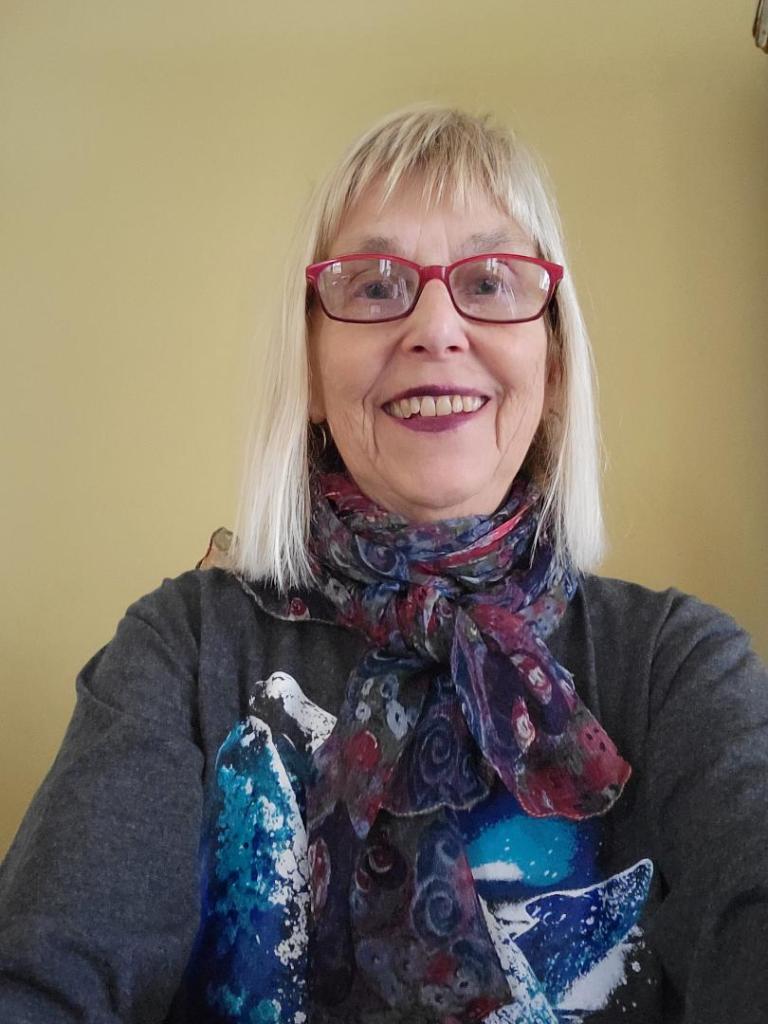
Patty Somlo’s most recent book, Hairway to Heaven Stories (Cherry Castle Publishing) was a Finalist in the American Fiction Awards and Best Book Awards. Previous books, The First to Disappear (Spuyten Duyvil) and Even When Trapped Behind Clouds: A Memoir of Quiet Grace (WiDo Publishing), were finalists in several contests. Her work has appeared in Guernica, Delmarva Review, Under the Sun, the Los Angeles Review, and over 40 anthologies. She received Honorable Mention for Fiction in the Women’s National Book Association Contest, was a Finalist in the J.F. Powers Short Fiction Contest, had an essay selected as Notable for Best American Essays, and has been nominated for the Pushcart Prize and Best of the Net multiple times. www.pattysomlo.com; @PattySomlo.

 Change Seven Magazine