You said, Let’s get dressed up and go out to dinner. It will be the greatest night of our life.
It was the second week of November, two weeks after your thirty-second birthday, and two weeks before my thirty-first. It was the ideal time to celebrate both of us growing older. I was visiting my hometown in the mountains and staying at my parent’s house for the weekend. I had known you for eighteen years then. We had fallen madly in love as children. You were from the city, and I had been trapped in that mountain town, where I stared everyday at that magnificent lake, wishing I could fly over it, the way I imagine you do now.
When we met I was thirteen, then fourteen, then fifteen, my favorite age, and the only place for us to kiss and fight was beside the moon as it floated on the dark lake water, or in the thick grass of someone’s backyard, or with a screen door between us on a front porch while I was crying. Years later, you got married, an insult I can never forgive you for, and before that, I ran away to live in New York City, which was, in your eyes, an even crueler offense. But, by that November, when we were planning our birthday dinner together, your wife had left you and I had published a book of poems that was mostly about us.
You said, I’m going to take you to my favorite restaurant. It’s an hour away and it has a fireplace, a crystal chandelier, and antique chairs that match your style.
Then you said it again: It will be the greatest night of our life.
I wore a red flower in my hair and it didn’t matter what you wore because your face was more beautiful than the Taj Mahal. Always was. When you were fourteen your cheeks looked like something that moving water had smoothed over until it shined. And then, seven years after that night, when I saw you in a coffin, not even forty, your stolen face made me finally understand that eerie human ritual. Never, before you, did I understand why we needed to lay out a body to view before we buried it. But that day, I realized I had never before seen a dead body that I loved the way I loved yours. I know the wisest among us say we aren’t supposed to love bodies, that the body isn’t who a person is, that the body is only temporary. We are meant to love something deeper, more ethereal, when we love each other. But I can’t pretend I didn’t love your body, and that I didn’t want, with a whole mountain of wanting, a chance to see you one last time before I would never see you ever again.
On the greatest night of our life you picked me up in your black car and we drove down that winding road toward the highway. The tree branches were arms embracing us as we moved forward. The whole night was a tunnel we were in together and everything inside it seemed to glisten or glow. We arrived at the restaurant and ordered drinks. As we toasted, you told the table next to us that I was a poet, that I had written a book, that I was just as brilliant as I was beautiful. Isn’t she a whole diamond, though? you said. I told them I was only a poet because of you, that you were my forever muse, that it was you who made it so that I could birth my first poem when we were barely teenagers. After that, I can’t even remember the other table being there. It was as if the table, chairs, plates, candles, and people sitting there just disappeared into thin air.
We ate clams together. Each tiny shell opened with a golden light that spot-lighted our eyes. Every time a plate was delivered to our table you would gasp and announce how glorious it was to see the new dish of food and how wonderful it was just to be together. There was no one in my life, before or since, that I could feel so at-home with, as if we were twins that had come to this place together; and at the same time, there was no one else who could make every small moment feel as exhilarating as encountering a sudden spacecraft.
Over dessert, you told me that you finally forgave your father. You told me you were proud of me, and that when your wife moved out your first thought was that now we could be friends again. You brought up that Mustang you crashed years ago, and how the night of the accident you didn’t think you’d make it to the hospital alive, so you kept asking the paramedics to call me. I told you that when I fell in love with you at fourteen, I also fell in love with New York City because you came from there, so I assumed the place would be full of more of you. But I was wrong. There was only one you. I told you sometimes I take the R train to the street you grew up on in Brooklyn as if it’s a pilgrimage to someplace holy.
You sang the whole way home. When we got to the driveway of my parent’s house you told me we were supposed to grow old together, but we just fell off track. I agreed. I asked if you remembered the first time you ever came to this driveway, that summer when you wore the same hat and same cologne everyday for two months. I got out of the car and when I looked back you were smiling. Before I went inside I shouted: THIS WAS THE GREATEST NIGHT OF OUR LIFE!
I know, you said, and drove away.
I was only asleep for an hour before I woke up dizzy with pain. I tried to run to the bathroom but only made it halfway there, falling onto the hardwood floor and throwing up ceremoniously. Both of my parents woke up to find me shaking on the floor. The food poisoning lasted all night. I spiked a fever and spent hours vomiting on repeat between fainting and crying. I begged my parents to call an ambulance, certain I was dying. When they didn’t, I shouted horrible things, told them they didn’t love me and didn’t want me to live to see daylight.
The next morning, the sunrise was a miracle. I layed in bed thinking how nothing in life ever comes for free. You can have the greatest night of your life, sure, but you’ll pay for it. You died the same week my son turned one year old. I was gifted a radiant child, rare and thriving, but you were taken from me. These days, I am scared of anything too gold. A terrifying doom washes over me anytime something good happens and I’m left wondering what kind of grief will be the cost for joy.
When they found you dead in your bed, the neighbors could hear your mother screaming and told everyone how your older brother tore the mattress from the bedframe and threw it, from the second floor of your house, out onto the lawn. Everyone thinks your story ends with your overdose. They don’t understand that dark day was the payment for all the bright yellow days that came before it.
I am the writer of this story, so I get to decide what order to tell it in. It doesn’t end there. It doesn’t end at your funeral. It doesn’t even end last night, or tonight, when you visit my dreams as a ghost. Instead, it ends with the motorcycle ride you took me on to go to the grocery store in the next town, on a lost Sunday, years ago. I argued with you for an hour that I wanted to take my car, because I had a lot of groceries to buy. But you insisted. Look at the sky, you said. It’s the best kind of sky for a motorcycle ride.
You brought your biggest backpack, and told me it could carry all the groceries in the world. It was true. I unzipped it, reached my arm down, and the space inside was endless. It was the black hole of backpacks. Your bike’s engine was a humming animal, waiting for us. I held onto your waist. The motorcycle’s wheels lifted us off the ground. We were weightless as we soared far above all the towns that hurt us. Up there, the clouds were all dragon-shaped. The dragon mouths opened to let us enter them. Their cloud-bodies became a tunnel we were in together, and the wind was silk. I don’t remember how I got back down from the sky that day, or how I was able to return home. But you never did. And I have been looking for you ever since.
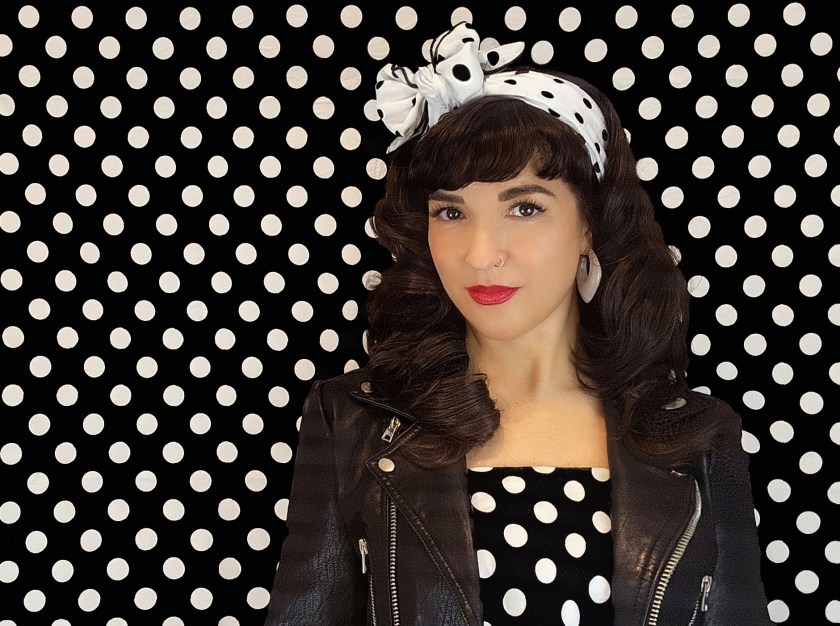
Erica Miriam Fabri’s first book, Dialect of a Skirt, was a finalist for the Paterson Poetry Prize and was included on the bestseller lists for Small Press Distribution and The Poetry Foundation. She has been widely published in magazines and anthologies and has worked as a writer and educator for Columbia University, Urban Word NYC, The New York Knicks, and Nickelodeon Television. She lives in Brooklyn and teaches Performance Poetry and Fiction Writing at Pace University. www.ericafabri.com

 Change Seven Magazine