My mom bought a gun. A handgun that she keeps in a corset tucked under her top. She goes out in the desert and pretends her practice shot is his head. She’s told me stories about him. Like how he used to take baby dolls full of ketchup and use them for target practice. I’ve seen his mugshot and his cold, lifeless eyes. I believe her.
“Come February 2020 we’re all going to have to be careful because he gets out of prison and we have no idea what he’s going to do, but we know what he’s capable of,” she warned my brother and I when we were kids.
Thankfully, his release date has gotten pushed back, but it’s only a matter of time.
My Nan showed me a photo on her phone. In the picture, three young girls with dazzling smiles lie on a bed with their chins rested on the Little Golden Books they held in front of them. A floral wallpaper filled the background. My eyes scanned the image from left to right. I recognized the two-diamond face shaped sisters that squeezed my Godmother, Sarah, between them. She had pigtails and stuck her tongue out while showing off her book, Sesame Street Oscar’s Book. My aunt Natalie was on her left and held up Rags. To the very right, my mom proudly flashed her read – Cinderella.
The Cinderella complex is a term that was first used by Colette Dowling, the author of a book about women’s fear of independence. The complex describes an unconscious desire to be taken care of by others. The name of the complex is derived from the fairytale character that many young women aspire to be. The complex is known to become more apparent as the person grows older. It is based on the idea of femininity that is portrayed in that story where a woman is beautiful, graceful, polite, supportive, hardworking, and is maligned by the females in her society, but she is incapable of changing her situation with her own actions. Women can be taken aback to find that after taking steps to extend their own autonomous presence in the world they may still find themselves seeking rescue/support from an external force and are tempted into dependency. This psychological dependence, whether it’s conscious or unconscious, is a wish to escape responsibility. This phenomenon or syndrome could explain why some women choose to stay in dysfunctional relationships.
If my life was a play, my dad would be a background character—one of those bodies thrown into the scene to fill empty space and have pretend conversations with the other background characters. As a child, I asked my stepmom, Tisa, why my dad couldn’t be like other Dad’s and play games with me.
She told me, “That’s just not how your father is. He shows his care for you by providing for you.”
Tisa’s been a part of my family since I was four years old. I’ve only heard stories about why her and my mom don’t get along, but naturally, I was put in the middle of their war and I always felt like a dog being tempted with treats to show them who I loved more. School functions felt like a reality show reunion with the amount of tension and spite that filled the room. If I was fortunate, the school had two nights for whatever concert or performance I was a part of, but for events like my high school graduation, I got an earful from both sides of my family about how I didn’t spend enough time with them after the ceremony.
I dread my wedding day.
I got my first cellphone when I was seven years old. This might not seem that shocking anymore since children these days practically pop out of the womb with an iPhone in hand, but back in the early 2000s it wasn’t as common, and my classmates swarmed around me and ask to hear the sample ringtones. I got my mom’s hand-me-down LG flip phone and it was to be used only for “emergencies” since I was going to be walking home from school. Most parents are paranoid about the dangers in the world that could hurt their children, but my mom’s paranoia was tenfold. I was raised to believe that people aren’t to be trusted until they prove otherwise. The cellphone was meant to protect me. The walk home from school was less than half a mile. When the last school bell rang, I walked home so fast I felt like one of the Jetson’s teleporting across the pavement. My dad’s house was closest to the school, so I spent the evenings there until Mom got off work. Dad didn’t get home until 5:00, but he always kept the pantry stocked. Usually, I’d come home and prepare either a bowl of cereal, frozen waffles, scrambled eggs or a PB & J. Then I’d plop myself in front of the TV and wait for the sound of the garage door.
I watched a lot of TV. Full House, George Lopez, Friends, all the original Disney Channel, Cartoon Network, and Nickelodeon shows. Instead of doing dance or sports or anything productive, my time was spent absorbing media. Most of the plot lines on television revolved around the female characters trying to get the male character’s attention. Sometimes the female characters changed their style or hobbies to try and impress the male characters who usually didn’t give them the time of day. So, as a young woman, I picked up that my purpose in life was to be a desirable object by men, and there were certain guidelines I should follow in order to achieve this:
I wasn’t supposed to show lots of skin because that distracted men.
I should smile, because happy girls are the prettiest.
I shouldn’t talk back or speak my mind.
Men don’t like women that wear too much makeup because they like the natural look, but they also don’t like the no makeup look. I was told that I should make my appearance attractive to men because that was the point of getting ready, right?
And the big one, every part of a woman needs to be shaved.
So naturally, instead of being proud of the developments my body made, I felt ashamed of them.
If I went to a restaurant with my family I’d be withdrawn from the present moment, and it would be brought to my attention that the waiter was “distracted by my beauty” so that’s why he spilled the water when he poured. I knew their intentions were good, but it made me want to shrivel out of my skin.
In my elementary years, after shopping at JCPenney with my mom I got dropped off at my dad’s house while she worked. I proudly modeled my new outfits for my stepmom because I thought that all women had an appreciation for fashion. I quickly learned that women have different styles. I strutted out in my new halter top with a silver O-ring that rested on my chest and tied around my neck. I felt like one of the Cheetah Girls. Then I met the wide-eyed judgmental stare of my stepmom and I felt like an ant. She told me I looked like a “hoochie mama” and that I wasn’t allowed to wear those clothes at my dad’s house. That weekend, she took me shopping at Target for a wardrobe that I could keep at my dad’s.
I’ll never forget the first time I saw P!nk’s “Party Started” music video on VH1. With her spiked hair and punk rock attitude she had a wave of confident energy around her that I had never seen a woman radiate before. Then I saw Avril Lavigne’s “Sk8er Boi” music video. She wore a t-shirt with a necktie around it and slammed on her guitar. I was mesmerized by the rebellious energy that these women exuded. The fragile looking airbrushed models I had grown accustomed to seeing on TV were replaced with edgy and hardcore women who didn’t mold themselves to fit society’s expectation of beauty. They didn’t mold themselves at all. They were loud, wore dark eyeliner and baggy cargo pants with chains, and were unapologetically themselves. They defied societal gender expectations and didn’t confine themselves to behaving “like ladies.”
My style evolved with my music taste. In middle school, I listened strictly to Billboard’s Top 20 pop songs and I dressed in Forever 21. Then as I listened to more punk bands, I started shopping at Hot Topic. I admired the punk scene’s message about not wanting to be like anyone else and purposely going against the grain. I started to part my hair so that it covered half my face. I cut it real choppy and my mom said it looked like octopus tentacles. Although my mom wasn’t a fan of this phase, she helped me dye my hair every color under the rainbow. One week I was feeling dark brown, the next purple, at one point my head looked like a bag of Reese’s pieces because it was dark brown with orange, red, and yellow stripes. When I went dark red, I thought I had finally found a sweet spot. With my new hair, beaded bracelets up to my elbows, and eyeliner caked to my eyelids, I went over to Dad’s house for the weekend. I finally felt like I had broken the mold I was forced into, and I didn’t care what anyone thought of me. Or so I thought.
My dad, stepmom, and I were on our way to Famous Dave’s BBQ and I sat silent in the backseat. No one had said anything about my new look. Finally, my dad broke the tension, “So, Tisa, what do you think of Tristan’s new hair?”
Without looking at me, she replied flatly, “My mom always told me that if I don’t have anything nice to say, then I shouldn’t say anything at all.”
I pressed myself as close to the backseat door as I could and wished that I could slip out the crack in the window. Black tears streamed down my cheeks.
Whitney Cummings is a female comedian, actress, and writer who has become an advocate for people who struggle with codependency. The first-time I learned about codependency was at a rehab facility. I went for a week-long program that informed family members about addiction, enabling, and codependency. Cummings simplifies codependency down to one easily digestible definition: “the inability to withstand the discomfort of others.” This definition opened my eyes to a lifetime of behavior I had been playing out without ever realizing it. I cannot stand discomfort or confrontation. I’m a people pleaser. To keep the peace, I’ve lived as a passenger to own my life and put other people’s feelings before my own.
I’ve brought dependent people into my life like birds with fractured wings and tried everything to heal their suffering. At the end of the day, I always felt drained and like I was pouring from an empty cup because I had no energy or time left to take care of myself. Then I became angry and resentful that no matter how much I gave it never seemed to be enough and once I tried to establish boundaries with these people and put my own feelings and well-being first it was as if everything I had done to help prior was forgotten and I got guilt tripped.
Codependency is not something that someone is born with. It’s a learned process, and this process has a long lineage through my family history. I saw the pain and anguish my mom felt from losing her sister, and then from a divorce. After so much loss, I felt like I was the only person capable of reminding my mom of her purpose in life, and I felt responsible for her happiness. She reminded my brother and me that we saved her life. I took this pressure and harbored it. I never realized how it could come back to haunt me.
My mom has a heart of gold, and I’ve seen her take in people like stray animals, and at one point, she took in a box of kittens that were abandoned in the Phoenix summer heat. Unfortunately, though, countless times I’ve seen her kindness be taken advantage of. Our house was like a foster home with all the kids we took in from broken families. It’s not like we were a good role model of a “picture perfect” family, but we tried. Or really, my mom tried. Our house was a haven for people who like those kittens, were just victims of circumstance. Though, unlike animals, people make conscious decisions, and even after my mom nurtured these people in hopes that she could convince them that there was some goodness left in the world, they stole, lied, and deceived with every chance they got. One of my brother’s childhood best friends crashed with us for a bit and sold our DVDs and my brother’s expensive longboard for drug money.
One of the main lessons they drilled into us at the rehab is: people won’t change unless they want to change themselves. I thought since I knew what type of behavior and people to avoid, that I could change the habits that have been passed down my family for generations. But the need to fix others runs deep in my DNA. If there’s anything the women in my family love it’s a project, and our biggest blessing and curse is the potential we see in others.
An enabler generally describes someone whose behavior allows a loved one to continue self-destructive patterns of behavior. An enabler does not have ill intentions by doing this, rather they usually think they are helping the person. The enabler believes that without their help, their loved one’s behavior will worsen, and they feel a personal responsibility to take care of them. Rescuing and caretaking are synonymous, and their definitions are closely connected to enabling. Enabling is a destructive form of helping and isn’t to be confused with acts of love, kindness, compassion, and true helping in instances where assistance is genuinely needed and appreciated. My mom enabled my brother for years because she was constantly cooking and cleaning for him while he struggled with addiction. He had no reason to change his behavior or feel responsible for himself because all his needs were being catered to at the expense of my mom’s happiness. She didn’t think she was doing anything wrong by caring for her son, at least if he was under her roof, she had control of where he was at. She felt needed.
Codependency is usually rooted in childhood and often, a child grows up in a home where their emotions are ignored or punished. The emotional neglect can contribute to low self-esteem and shame. This can result in the child believing that their needs are not worth attending to. If parents do not fill their role as guardians, the child may need to perform tasks that exceed their developmental ability. For instance, if a parent is too drunk to fix dinner, the child will learn to cook for themselves, so they don’t go hungry. Sometimes a child is expected to care for their own parent. When a child is focused on keeping the household running, they ignore their own needs and may associate the caregiving role with feelings of stability and control. The caretaker often cares for their partner out of a sincere desire to help, but their caretaking enables the person to continue their behavior. Codependency is many things. It’s a dependency on people—on their moods, behaviors, sickness, or well-being, and their love. Melody Beattie, author of self-help book, Codependent No More writes, “It is a paradoxical dependency. Codependents appear to be depended upon, but they are dependent. They look strong but feel helpless” (51).
Her hair is pulled up and loose strands cascade down and caress her face. She has a squinty eyed smile and is holding me over her shoulder. I remember mistaking her for my mom except for her dark brown hair color. My bright brown eyes look at her like she’s my world and the fleshy pink of my mouth fills the left edge of the frame. I’m not exactly sure how old I am when this photo was taken, but it’s one of the few I have of me with my aunt.
Growing up, whenever my mom and Grandma were in the same room, I always felt a chill in the air. After holiday gatherings while we gathered the dishes, I asked my mom, “Why are you so mean to Grandma?”
After releasing an exaggerated exhale, she replied, “Your grandma and I have a complicated past. The woman she is now is not the woman I grew up with.”
I asked her to explain, because I couldn’t understand how the woman who picked me up from school to take me on movie and mall dates could be capable of possessing anything but kindness. Then my mom explained her childhood to me.
“When your Aunt Natalie and I were growing up, your Grandma decided that she was going to raise Aunt Natalie, and her boyfriend John raised me. So, your aunt Natalie and I didn’t really become close until we were adults because we were separated. John was very controlling and didn’t let me leave the house, but Aunt Natalie had lots of friends and was always going out.”
My heart shattered with pity, and suddenly I saw my mom more clearly. I had wrongly assumed that she and my aunt were best friends their entire lives. My mom had briefly mentioned to me the darkness of her past, but I always imagined her big sister by her side during these troubled times. The reality was my mom was trapped in the house like Cinderella while my aunt climbed to the top of the social ladder.
I see now why this makes the destruction of their blooming relationship even more painful—it never had a chance to reach its full potential.
“You know your aunt Natalie was in the last semester of getting her bachelor’s degree before she died. It took her eight years, but she took a couple night classes at a time while raising Britney, and she was just about to graduate…” my Nan shakes her head and her eyes glint like sun glitter.
She reached out and I cupped her hands in mine. Veins like tree roots stretched across her frail knuckles. The lost look in her eyes reminded me of a familiar expression I’ve seen on my mom’s face too. After talking about her, they would always gaze into the distance—as if the longer they looked, my aunt would reveal herself. It’s that hopeless, lost, expression of despair I imagine my grandma had when she lowered her daughter’s body into the military cemetery plot owned by the person responsible for putting her there.
“I’m just so proud of you for doing what you set your mind to. Your aunt would be so proud.”
I needed to go to college in Flagstaff to get physical and mental space away from my family and the same friends I’d known since elementary school. I never envisioned myself going to college. I didn’t think my family could afford it, and no other woman in my family had ever graduated with a degree. One appointment with my high school guidance counselor changed the course of my life. She told me that because of my good grades, I was eligible for a full ride tuition scholarship from Northern Arizona University. My dad has briefly mentioned his time at University, but nothing memorable, and he didn’t help me in the college application process, so I was left to put together the pieces myself. As soon as I got my admissions letter, I felt like I had an opportunity to pursue something that no one else could take away from me: an education. I packed my bags and took off from Phoenix.
I followed Mom’s Mazda off Exit 28 for Cave Creek Road. I drove cautiously since all the stuff I had packed blocked my rear-view-window. The desert sun reflected off the bleached gravel and everything was flat except for the Saguaros that grew like monuments for the Southwest. We drove slowly down the freshly paved road. I felt like I was floating on the black stroke of an artist’s paint brush. Rows of uniform concrete slabs stretched across the flat land and it appeared like they continued infinitely. The glow of my mom’s break lights died, and we stepped out of our cars. The hot, sandy air clung to our skin. Under our feet, I read the headstone: NATALIE ANN KIEHLE AUGUST 29, 1966 – JULY 6, 1998 WIFE OF DAVID KIEHLE MC.
“They really had to write that, like that’s all she was?” I ask.
“He had full control over everything. Grandma had bought a plot at Green Acres in Mesa under a tree, because she loved trees and grass, but he got to make the decision as her spouse, despite them being in the middle of a divorce. He wanted her buried here at the VA Cemetery so he could be buried on top of her.”
“That’s disgusting,” I said in horror.
“It is” her eyes lowered. “No one was allowed to send flowers to the funeral except him, and many people didn’t know she was dead until long after. They would call and ask to speak to her, and he lied and said that she was out shopping or in the shower.”
“Oh my god, that’s terrible.” I muttered.
“Yup, I was a parent, but I was checked out at the time. I was raising you, a newborn baby while in the midst of a divorce and getting phone calls from my friends asking why they couldn’t get a hold of Natalie, and I’d have to explain it’s because she’s no longer with us. I couldn’t even process my own emotions because I was busy making sure everyone else was okay.”
I wrapped my arm around my mom’s shoulder and tried to console her. We locked our eyes on the grey slab. We both knew that her spirit wasn’t here in the arid desert, but we spoke to her anyway.
“Aunt Natalie, we all miss you so much, and I wish I had the opportunity to get to know you. I’ve heard great things. I hope I make you proud during my time at college.”
“Please watch over Tristan as she ventures out on her own and guide her to success.” My mom rubbed my shoulders like it would bring me good luck.
We traced the hot metal engraving with our fingers and said our goodbyes before we continued our drive to NAU.
The wind whistled loudly outside the window of my professor’s office. It’d been raining all week in Flagstaff and the clouds drooped like pudgy puppy bellies in the sky. I sunk back in a chair. I felt defeated by my latest piece in my senior writing class and didn’t know what direction it was heading in. They asked me a question that made me fidget while I searched for an answer, “Who was your Aunt to you?”
My brain scrambled to make sense of the question. My aunt died the year I was born, so technically I never knew her, but her memory haunts my family like a ghost so I’ve always felt like her spirit is alive. From what I’ve heard, she was extremely driven and smart, she got along with everyone, and was a natural manager because of how organized she was. She had an infectious smile and a bubbly sense of humor. My mom and her bruised their ribs from laughing so hard doing Cheech and Chong impressions.
I’ve seen the look of hope in my mom’s eyes when I do something that reminds her of my aunt. Like a snort in my laugh or a twist in my stomach when I’m anxious. It’s as if for a split second she believes that a part of her sister is still alive. My mom is a realist, but she’s also hopeful. She has faith that spirits live on and she sees her sister in the form of life’s gentlest creatures—butterflies and deer. When she got married on a golf course in Iowa she prayed that her sister would be there. On the day of the wedding as she descended down the aisle, a deer poked its head up from behind some bushes nearby.
My aunt’s story is a tragedy that was told to me as I grew up as a sort of fable to teach me to be independent. Her memory lingers like a ghost in the hallway of my grandmother’s home, in the stories of my mom’s childhood, and in the hope for my future.
It’s morning. I nibbled on some quiche while my great aunt Cheryl hobbled around and reorganized the kitchen. After a brief turn of events I went from living in an apartment on my own in Flagstaff, to being roommates with a 77-year-old woman in Phoenix. We have a reciprocal relationship. She provides me with a roof over my head and food in my belly, and I reach and bend for her. Her spine may be in shambles, but her memory is sharp. She told me that my grandma called that morning and said that her boyfriend wasn’t coming to Easter dinner because he didn’t want to risk getting sick. I beamed and relaxed at the thought that I wouldn’t have to put up with any crude remarks about what I was wearing this year. My great aunt smiled too, “Yup the women in our family sure know how to pick em!” Her ex-husband had been unfaithful to her, so her comment dripped in sarcasm.
“Do you know what it was Aunt Natalie saw in David? I mean from the pictures I’ve seen of him his eyes are so hollow and empty, I feel like one look and you could tell he’s a psycho.”
“Yeah none of us liked him from the start, but truth be told, I think your aunt was looking for an escape. She had gone to U of A and toured the school, but he promised her that if they were married then the military would pay for her school. He made all these false promises to her…”
There’s this piece done by an artist named Violet Clair, the comic pictures a man asking a woman if she’d like to go the movies. The woman replies, “Why? I’ve already projected an entire fictional narrative onto you.” This comic is obviously meant to be comical, but unfortunately this projection or construction of who you’d like someone to be versus who they really are is one of the many problems that keeps women in dysfunctional relationships. Red flags are ignored if there is even an ounce of potential that fulfills a woman’s fantasy. Many women are so focused on getting their happy ending moment that they see anyone with signs of interest as a potential suitor. Afterall, fantasy is more comforting than reality.
Codependency has also been called “relationship addiction” because people with codependency often form or maintain relationships that are one-sided, emotionally destructive and/or abusive. Women who are codependent can become addicted to relationships because they’ve never had to stand alone and feel incomplete without a partner to take care of or someone to feel needed by. Unfortunately, some of the women in my family have become victims of this cycle. For some, the consequences have been worse than others. Perhaps if my aunt would’ve considered her other options for escape, or merely, if she would have had more options available to her, things could’ve ended differently.
I’ve been guilty of following in the footsteps of the women in my family, but I’ve learned from those mistakes. I did something my maternal lineage has never done; I was single for years. I took time to reflect on who I am on my own and found peace and strength in solitude. I tried to block out the parts of my past that I had chosen to forget, as if I chose to not acknowledge them than their memory didn’t exist, but unfortunately memories resurface like a ghost, and though we are what we remember, we are also comprised of the memories we’d like to forget.
Source
Beattie, Melody. Codependent No More. Hazelden Publishing, 1992.
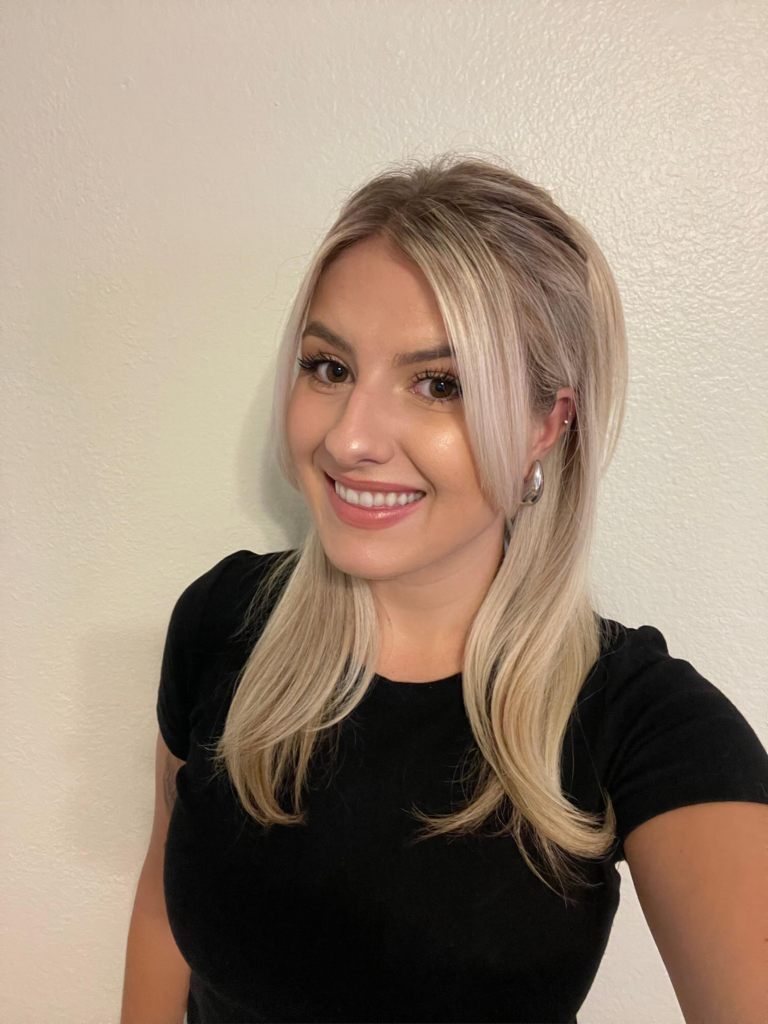
In the sun-soaked city of Phoenix, Arizona, Tristan Trieber lives a vibrant life filled with passion, determination, and the loyal companionship of her dachshund puppy. At the age of 25, Tristan’s journey is one that reflects the spirit of the desert she calls home- resilient, warm, and endlessly inspiring. She strives to create stories that resonate with and captivate her readers. She shares her poetry on Instagram @dittopoems and plans to be more active on her blog at myfriendsbasement.blogspot.com. She is a novice writer and ‘Memory Ghosts’ is her first published work.

 Change Seven Magazine